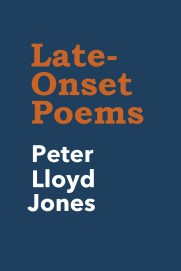
Reading:
Not so much if as when

‘If anything happens to me
My papers are in the sideboard
Left hand drawer. You know,
The one that used to be
In our old middle room.’

‘If anything happens to me…’
Was my mother’s verbal delicacy,
Her way of raising the possibility
Of being felled one day
By heart attack or stroke
And dying on the spot.
Or being suddenly struck
Down in some other way
Before she could alert her family.

There is a sliding scale of how
We think of future things.
There is the unimaginably remote distance,
Too far away to be reckoned in human
Measures, in generations for instance.
Being swallowed by a black hole say,
Unlikely for the next few billion years
Although the tabloids like to flaunt
The possibility on a slow news day.
Others, such as being struck by lightning -
Benchmark for incredibly unlikely -
Should be taken into serious account only
If you plan to play golf in a thunderstorm.
So you can say, ‘If I get struck…’ as irony,
And ‘When I get struck…’ has no meaning.

Others again, such as death
Seem too far off to be worth
Bothering with when you are twenty
While you still feel hale and hearty.
Although you know the end is certain,
It’s bad form to talk about that final curtain.
You’d expect to say ‘if’ about that
Unwelcome prospect till you get past sixty.

But as you reach your eighties
And you take a half a dozen
Multi-coloured pills each day
You look at things another way.
Your fate is not in question.
You can no longer cozen
Yourself with euphemism then:
Not so much ‘if’ as ‘when’!

The use of ‘if’ instead of ‘when’
Gave a certain reassurance
After all it may be only
Headache. Who can know?
And away it’s far too late
To take out Life Insurance.)
But as the years continue to sail
On and you begin to think of your
Ninetieth birthday, and hearing
And eyesight both begin to fail,
Locution changes. You shift the
Mental slider a touch or two
Towards the ‘when’ end of the scale.

My mother’s heart attack came
Suddenly, before breakfast.
She’d puffed and panted her way
To do her shopping every day
For years, a chance to meet and greet
Acquaintances, but grateful for each
Resting place along her local high street.
Getting up the stairs became a trial too.
That day though, she knew at once the difference.
‘When’ had come and ‘when’ was now.
She straightway called the ambulance.

She’d been right. ‘If’ went into overdrive
And shot past ‘when’, past real-time too.
Events were now in the past tense.
I held my mother’s hand as breath
By laboured breath she died in hospital.
She seemed asleep. I sought to comfort her,
To say that she was not alone.
‘I’m here.’ I said and spoke my name.
But could she hear? ‘Some patients tell
That while they looked unconscious,
They could hear the things you said
Although they couldn’t speak.’
And so unknowing, we whispered words
Of gratitude, of comfort, of love and of farewell.

Now I approach that exact same age as she was
When that sudden shift in how she saw the risk
Of dying took her unaware that day.
How then should I address my destiny
That looms now all too near? I convey
My papers to the top drawer of my desk:
‘If anything should happen to me…’
 Peter Lloyd Jones