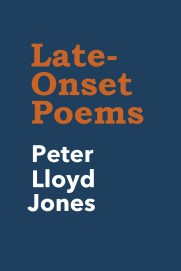
Reading:
Text:
The epigraph on the home page tells the story of my life. Many and varied yes, but most of the chopping and changing was neither planned nor particularly desired. I got off on the wrong foot and from then on it was a matter of grabbing at any opportunity that came my way. It began with a simple mistake at school which led me to study science rather than the humanities, which were my favourite subjects.
It will lead to a good career though, or so they said. True, I needed to get a job the moment I left school and I was able enough (just about) to do it. What I hadn’t foreseen was the stress of performing at a high level in something that held no interest at all. For I had already been bitten by the artistic bug. I wanted to become a painter. After a frantic scramble I managed my A-level in Art in a few months but the sheer implausibility of an artistic life for someone from my working class background sent me off to Imperial College, where I endured three years in a boot-camp for nineteenth century chemistry. Somehow I survived, sanity preserved by painting whenever I could. Yet another step in the wrong direction took me on to a PhD in Cambridge – the alternative then was National Service! Only when I’d completed my doctorate at Kings did I finally pluck up courage and try to paint full-time, funding it by teaching O-level chemistry at a local technical college.
For I’d had that crucial lucky break. To my undying gratitude, Bill Coldstream had accepted me as one of his hand-picked mavericks at the Slade. A real art school after all those evening classes! I managed to escape from the Tech too with a research grant at the Courtauld Institute. And my run of luck continued. I got teaching job in an art school. I began to do occasional talks on the old Third Programme and overnight found myself a guru on design, a subject of which I previously knew nothing. That in turn led eventually to my main professional occupation, as Head of Design at Kingston University. So it all came out right in the end you might say. But the reality of earning a living and trying to continue creative work of whatever kind is pretty arduous and I never found a satisfactory solution to that. Only on my retirement was I able to paint again full time.
In all those years, poetry was but a consoling noise in the background. So starting to write poetry in my old age has come as a complete surprise. In fact, poetry had already made several serious incursions into my life, visitations that, had I been wise enough to see them for what they were, might have led me to write verse earlier. The first happened while I was still at school. English Literature was mandatory for our General Schools – roughly today’s O-levels – and the syllabus included some, what was considered then, modern poetry. Much was what I considered pretty feeble: Masefield, De la Mare and so on, though I did warm to the sing-song of early Yeats’ ‘Lake Isle of Innisfree’. But it was the war poems of Wilfred Owen that really stirred my heart for the first time. ‘Miners’ could not fail to resonate, since my own father had started life as a collier. And he too was lost in a war. But at age sixteen the people who wrote these things were unimaginably remote from the Battersea where I lived. And the idea that I might follow a literary career was beyond dreaming even.
My second encounter with a sympathetic mind happened not with reading but with singing. During my unhappy undergraduate days as a would-be scientist, I joined the college choir. One of the pieces we were to sing was Vaughan Williams’ ‘Sea Symphony’. Words by Walt Whitman. I don’t think that I had heard of Whitman up to this point but his words – carefully curated by the composer, as I later discovered – overwhelmed me. Here was poetry, both demotic and democratic. The paperback ‘Leaves of Grass’ which I bought back in the 1950s, still survives, its yellowing pages falling apart to the touch. His celebration of comradeship meant much to me then, since all my closest friends were fellow would-be artists who happened to be male. Whitman also pointed me towards an American slant on poetry that has endured since. And his easy-going vernacular style felt as natural as my own speech.
The most important irruption of poetry into my life came while I was at Cambridge. By chance I happened to turn on the radio during a talk by the American critic R. P. Blackmur on a poem by Wallace Stevens. Again, I had never heard of either. But Stevens great ‘Ideas of Order at Key West’ hit me like a bomb. It was not just the recursive incantation of his cadences and the exotic, tropical metaphors, so much as the subject itself – the relationship between the creative mind and ‘external’ reality. Here was I in a lab, struggling with high-tech kit, trying to make sense of pointer-readings and wondering what story they, or rather I, would tell. But who was the ‘I’ that would do the telling? And tell about what? Readings in the philosophy of science was one way in, but the manner in which the music of Stevens’ verse held all those paradoxical, provisional elements together in the mind was something else. I got Heffer’s bookshop to send me a copy of his ‘Collected’ from America and the beautiful Knopf edition at once became my bible.
It is ironic then, that I should find my way back to ‘English’ English poetry after a bibulous lunch in Italy. It happened because of an Arts Council scheme to commission portraits of contemporary English writers by current painters or sculptors. A friend of mine had happened to land a commission for a bronze head of Gavin Ewart, another name that had not come my way. As part of their conversation, my chum had acquired a ‘Collected Ewart’ and it was this that I picked up after yet another stiff caffé corretto. Opening it at random I happened on one of his raunchy numbers, ‘A Victorian Enigma’. I’d only got through half a dozen lines before I collapsed into hysterical laugher, manic giggles that returned every time I though about it again. Back in England, I bought both ‘Collected’ volumes and it was Ewart rather than Larkin that led me to my own voice. Ewart it was too that gave me the sense that humour also has its place in the canon.
So there they are – an unlikely crew to be sure – but their combined influence has made me what I am as a writer. Though painting still exerts a powerful tug, I have come to think that poetry is what I should have been doing all along. Then I could have written in the present tense about all the great moments in life: marriage, the birth of children and so on. But even at this stage, the closing years, it is with pleasure that I count up the number of love poems in the present collection. As it is, I hope that the random meanders of my life – the roads forsaken – will have given me a deep enough understanding and a rich enough vein of material to make your visit to this site worthwhile.
 Peter Lloyd Jones